


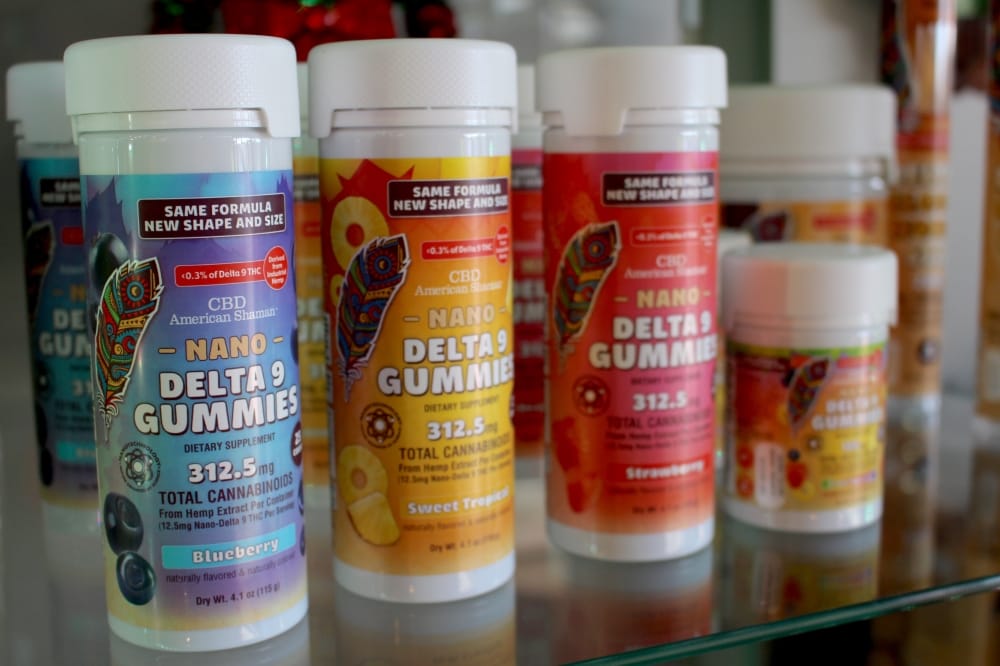
Texas retailers can resume selling smokable hemp products after a Travis County judge temporarily blocked some of the state’s sweeping new regulations on the hemp industry.
What’s happening
On March 31, the Texas Department of State Health Services enacted rules changing how THC content is measured in consumable hemp, which industry experts said effectively outlawed most smokable products containing the natural hemp flower.
The Texas Hemp Business Council, a federal hemp industry group, and several local hemp companies sued the state April 8, arguing that the state health department does not have the authority to reclassify legal THC levels and warning that Texas businesses faced “significant economic harm” due to the changes.
State officials have defended the rules, saying they are in line with a September executive order by Gov. Greg Abbott, who at the time called for stricter oversight of the multibillion-dollar hemp industry. Abbott previously vetoed an outright ban on consumable hemp sales.
Travis County District Judge Maya Guerra Gamble sided with the hemp industry in an April 10 ruling, directing the state not to enforce the new THC testing requirement and a restriction on the transportation of hemp products between states.
The temporary restraining order will last for two weeks, with an additional hearing on the case scheduled for April 23.
What they’re saying
Texas law formerly classified products as legal hemp if they contained no more than 0.3% Delta-9 THC—the primary psychoactive ingredient in cannabis—by dry weight. The DSHS rules state that products must be measured by total THC content, which includes a naturally occurring cannabinoid called tetrahydrocannabinolic acid, or THCA. This outlaws most products containing the natural hemp flower, which is more potent than some synthetic products, hemp experts said.
Kenneth Shayne Berner, who owns two hemp dispensaries in League City and Bacliff, said in court documents that roughly 40% of his business’s revenue in 2025 came from products containing THCA. Berner anticipates laying off employees or closing a retail location if the testing rule remains in effect, he said in an April 6 affidavit filed with the lawsuit.
“Roughly 75% of our customers who buy our hemp products use [them] to treat or manage a physical pain, sleep disorders or PTSD,” Berner said. “Our customers have expressed frustration over the challenged rules because they feel the only safe places to purchase hemp products are being taken away.”
Kallan Salganik, who runs dispensaries in Waco, Temple and Fort Worth, said in an April 6 affidavit that he expected to lose about $3 million in annual revenue from hemp inventory that cannot be sold due to THCA content.
In a written response to public comments last month, the DSHS defended the new THC testing requirement, noting that they were consistent with federal hemp laws and the governor’s executive order.
“[State law] requires rules to be consistent with federal laws and regulations; the federal regulations account for THCA conversion. Furthermore, the test results must accurately represent the total available THC, calculated as the sum of both THC and THCA content,” the department wrote.
There are over 13,000 Texas retailers registered to sell consumable hemp products in Texas, per DSHS records, while about 750 companies are licensed to manufacture hemp products.
One more thing
In their April 8 lawsuit, the hemp businesses also asked that a rule hiking licensing fees for retailers and manufacturers be blocked.
Community Impact reported that the DSHS increased the annual fees, which companies must pay to operate in Texas, by more than 3,000%. Retailers are required to pay $5,000 per retail location each time they renew their operating license, up from $150 previously. Hemp manufacturers must pay an annual fee of $10,000 per facility, up from $250.
Guerra Gamble let the higher fees stay in place in her temporary restraining order.
During a January public hearing, some Texans said increasing licensing fees and tightening other regulations would help the state protect consumers and ensure children cannot access consumable hemp products.
“Cannabis advocates say that this is a billion-dollar industry, so it’s fair and appropriate for the people who profit from selling a billion dollars of intoxicating and harmful products to pay fees that help cover the costs associated with the regulation and societal burden of the product’s harms,” Betsy Jones, the policy and strategy director at Texans for Safe and Drug-Free Youth, said Jan. 9.