


Updated 12:15 p.m. April 28
The leaders of Camp Mystic said they felt they “acted reasonably” in the early hours of July 4, as rain poured and the Guadalupe River rose.
“I believe, based on what we knew then, we acted reasonably,” Britt Eastland, one of the camp’s directors, told lawmakers April 28. “But now that we know what this river can do, … we’re ready. Everyone, I think, in the camping community is ready to make changes.”
During the first day of hearings April 27, state investigators and lawmakers said they were concerned the Eastland family was “complacent” and did not make changes to disaster plans after past floods. Family members who testified before the committee April 28 pushed back on those concerns, noting that the July 4 flood was more severe than previous storms in the area.
“I don’t think that we had a culture of complacency—I disagree with that,” said Richard Eastland, Camp Mystic’s head chef. “My father was very diligent that night. [But] I know that we failed these families behind us.”
Richard’s father, Dick Eastland, died in the July 4 flood.
Updated 11:30 a.m. April 28
Answering questions from lawmakers April 28, members of the Eastland family laid out changes they were making to improve safety and security at Camp Mystic. The Eastlands plan to welcome campers this summer to their Cypress Lake location, which was undamaged by the flooding. The parents of some flood victims have objected to the planned reopening.
Cypress Lake camp director Britt Eastland said the family was installing generators to power its front office and dining hall; placing walkie talkies in all cabins to ensure counselors receive weather alerts and other communications; requiring counselors to arrive at camp early for emergency training; and running evacuation drills with all campers and staff.
“We knew that if we were ever going to again be able to operate camp, we needed to go above and beyond,” Britt Eastland said.
During an April 27 hearing, investigators hired by the legislature said counselors were not trained on what to do in an disaster and emergency drills were not conducted at the beginning of camp sessions. Counselors also did not have access to emergency ladders, life jackets or portable radios, investigator Casey Garrett said.
Sen. Charles Perry, R-Lubbock, reprimanded the family for not having those safety measures in place last summer. Under state law, youth camps must have a written evacuation plan and conduct disaster drills.
“I want to remind people that stuff was already supposed to be done, and I’m almost certain that none of the other camps were doing it, either,” Perry said.
Perry said that if Camp Mystic is allowed to reopen its Cypress Lake location, he did not think the Eastland family should continue running the camp.
“There’s a point where the consequences of not doing your job are so significant and so consequential that you don’t have the privilege of running a business,” he said April 28. “What deterrent does that send to another operator that [you] can have kids die with [your] watch and still be an operator? … “Y’all will not be an operator next season, if I can have anything to say about it, because you just missed it, and it was tragic.”
Mary Liz Eastland, a director at the Guadalupe River camp where 27 campers and counselors died, said she thought Perry’s suggestion was “appropriate.”
“I think we’re willing to take a step back,” she said. “If camp can go on, that’s okay with us.”
Britt Eastland said the family does not yet plan to reopen its Guadalupe River camp, adding that it was “not an easy decision” to move to reopen the Cypress Lake site.
“We’ve heard from hundreds of families that they are asking us to please open. … They’re asking us to provide healing for their daughters,” he said.
Originally posted 11 a.m. April 28
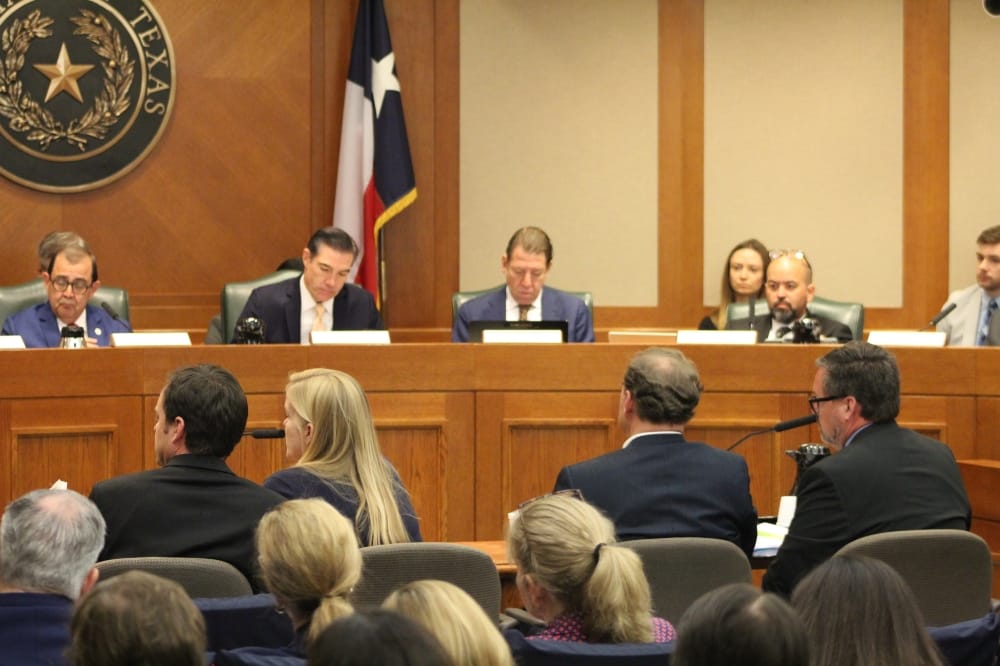
The Eastland family, which owns and operates Camp Mystic, opened the second day of hearings held by special state legislative committees investigating the July 4, 2025, Central Texas flood.
Edward Eastland, who runs the camp’s Guadalupe River location with his wife, Mary Liz, said he was “devastated” about the deaths of 27 campers and counselors in the early hours of July 4.
“We tried our hardest that night, and it wasn’t enough to save your daughters,” Edward Eastland said as dozens of the victims’ families sat silently behind him in a Texas Capitol hearing room.
“Every morning waking up is hard, every moment of every day is hard, and yet that pain feels like nothing compared to what you’re going through,” he added. “To talk openly about our pain feels like I’m insulting you, so I have largely remained quiet.”
Committee members are also set to hear from the state health department, the Texas Division of Emergency Management, flood victims’ families and the parents of some campers who survived the flood during the April 28 hearing.
How we got here
Over 130 Central Texas residents and visitors died over the July 4 weekend as an intense rainstorm and flooding swept through the region. Among them were 28 deaths at Camp Mystic: 25 young campers, two 18-year-old counselors and Richard “Dick” Eastland, the camp’s executive director. The private Christian girls camp has been under scrutiny for the actions camp leaders took to attempt to save campers in cabins near the Guadalupe River.
During an April 27 hearing, investigators told lawmakers studying the flood response that those deaths could have been prevented if camp leadership took action sooner and had a written evacuation plan in place.
“To camp owners across the state of Texas: lives could have been saved without changes in [state] statute,” Sen. Lois Kolkhorst, R-Brenham, said April 27.
One more thing
During special legislative sessions last summer, lawmakers passed a slate of flood planning and response bills, including requirements that youth camps remove cabins from floodplains and counties impacted by the July 4 flood install outdoor warning sirens. Some other emergency response and communication measures did not pass the legislature during the special sessions.
While the special investigative committees can examine what happened on July 4 and make policy recommendations, committee members cannot currently pass new laws, as the legislature’s next regular session does not begin until 2027. Gov. Greg Abbott has the authority to call a special session at any time, although he has not publicly commented on this week’s hearings.