


On May 26, Republican voters will choose their nominee for the Texas Railroad Commission in a runoff election between former Tarrant County GOP Chair Bo French and incumbent Jim Wright.
The overview
The Republican railroad commission race is one of several statewide contests that advanced to May runoffs after no candidate received more than 50% of the vote in the March 3 primary election.
Wright and French were the two highest-performing candidates in the five-way primary race. Wright narrowly led the pack with 32.1% of the vote, while French received 31.7% of the vote.
The winner of the May 26 overtime round will face state Rep. John Rosenthal, a Houston Democrat who ran unopposed in the primary, in the November midterm election. Third-party candidates may also appear on the November ballot.
The Texas Railroad Commission regulates Texas’ oil and gas industry, according to its website, while the state’s railroads are under the control of the Texas Department of Transportation and the federal government. The agency has three commissioners, who are elected to staggered six-year terms.
Preparing for the polls
Texans can vote early in the runoff election from May 18-22. Runoff elections, like primaries, are separated by political party, meaning Texans who voted in one party’s primary this March may only vote in the same party’s runoff. Individuals who did not participate in the March primaries or a third-party nominating convention can vote in either party’s runoff this May.
Runoff election day is May 26. For more information about the state and local races on your runoff ballot, visit communityimpact.com/election.
What you need to know
The original version of this election questionnaire was published Jan. 16, ahead of the March 3 primary election. Community Impact is republishing Q&As for five statewide runoff races, with the goal of providing a side-by-side, equitable resource for Texas voters to review candidates’ perspectives as they prepare to head to the polls this month.
This Q&A was updated to remove Katherine Culbert, Hawk Dunlap and James “Jim” Matlock, three Republican candidates who did not advance to the May 26 runoff. Candidates’ answers were not changed from the originally published article.
Candidates were asked to keep responses under 50 words, answer the questions provided and avoid attacking opponents. Answers may have been minimally edited or cut to adhere to those guidelines, or for style and clarity.
* indicates incumbent candidate

What would your top priorities be if elected?
Top priorities: revolutionizing RRC permitting, cutting regulation, decentralizing the Commission’s power back to regional offices, and ending DEI spending at the RRC.
What are your views on the future of renewable energy in Texas?
The RRC regulates far more than just oil and gas. I believe that new technologies and methods can be helpful in producing energy, but oil and gas are our most reliable backbone.
What steps will you take to handle environmental risks and overall safety related to Texas’ oil and gas and pipeline infrastructure?
We need to plug more abandoned wells and do it right. Currently, most contracts for this are awarded on non-competitive DEI criteria. By ending DEI criteria and requiring competitive bidding, we will be able to start plugging more wells.
What changes, if any, would you make to the rules governing drilling and hydraulic fracturing in Texas?
I would streamline permitting and use incentivization, rather than overregulation, to encourage the RRC’s preferred methods.
What do you see as the greatest challenge for Texas in the next 5 years?
Energy and water are currently and will continue to be huge challenges.
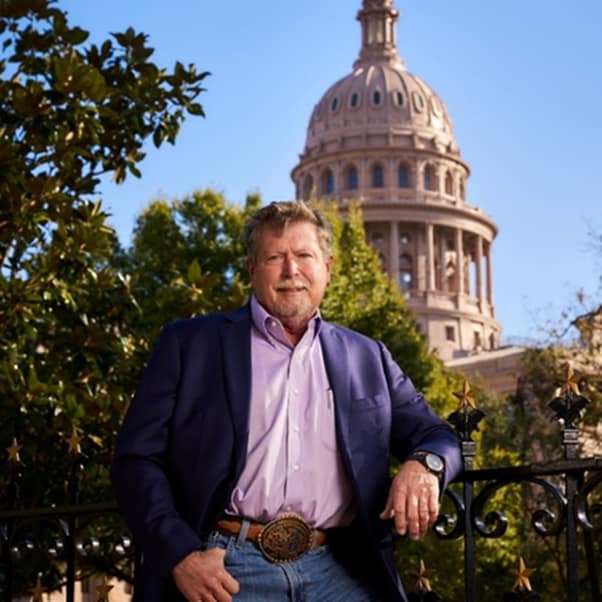
What would your top priorities be if elected?
It is essential that Texas leads America and the world in energy production. To do this, we need to protect Texas energy independence. This boils down to strong oil and gas production, fair and consistent regulation, and protecting the land, water, and people of Texas.
What are your views on the future of renewable energy in Texas?
Renewables will continue to play a role in Texas’s energy mix, but never at the expense of the reliability of our electrical grid. We must ensure Texas has enough reliable baseload power to meet rising demand. That can be accomplished by fossil fuel generation, low-carbon nuclear power, or newer technologies.
What steps will you take to handle environmental risks and overall safety related to Texas’ oil and gas and pipeline infrastructure?
As Commissioner, I have worked with our state legislature, as well as the federal government and neighboring states, to ensure necessary funding for intrastate and interstate pipeline system inspections throughout Texas. We exceeded the goals for pipeline inspections by 127%, and the goals for oil and gas inspections by 127%.
What changes, if any, would you make to the rules governing drilling and hydraulic fracturing in Texas?
It is important that the Railroad Commission rules accurately reflect the current practices and methods being used in the field. During my tenure at the Commission, I have worked to update and modernize the rules at the Commission, some of which hadn’t been updated in almost 40 years.
What do you see as the greatest challenge for Texas in the next 5 years?
Regarding the energy sector, we must make sure that all of the new forms of energy and technology meet the same high standards as traditional energy. That’s why I am leading efforts to develop responsible regulations that protect landowners, groundwater, and community safety while encouraging investment and long-term opportunity.