


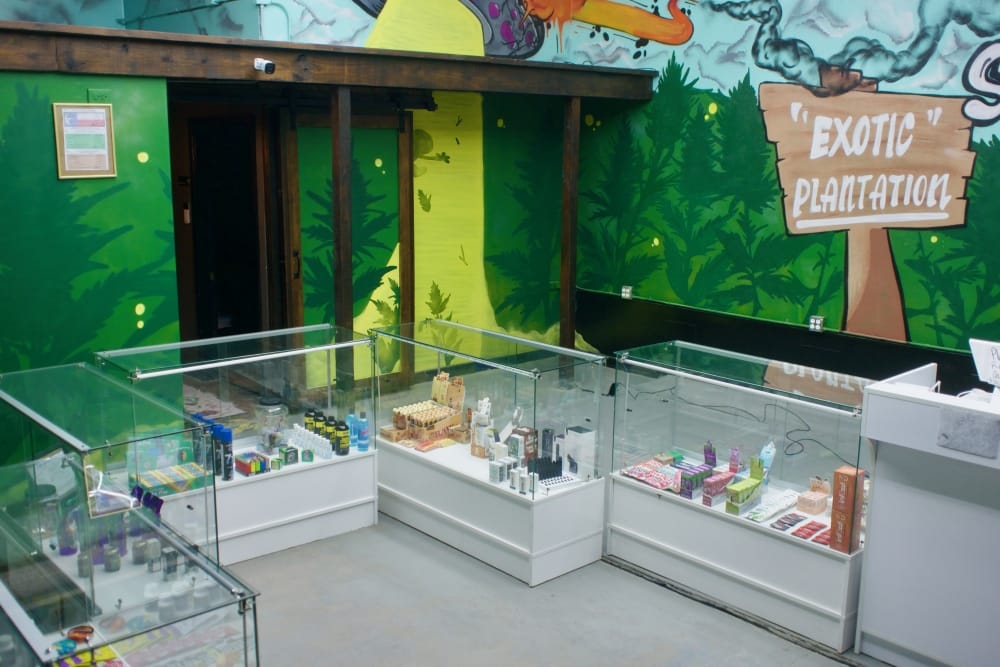
Texas retailers can keep various smokable hemp products on their shelves through late July, a Travis County judge ruled May 1.
What’s happening
Judge Daniella DeSeta Lyttle’s ruling prohibits the Texas Department of State Health Services, which regulates and licenses consumable hemp businesses, from enforcing new THC testing requirements and sharply increasing licensing fees. Industry experts previously said the new rules, which took effect March 31 before being blocked in court, would put some Texas hemp growers, retailers and manufacturers out of business.
DeSeta Lyttle’s temporary injunction extends an earlier pause on the DSHS rules, which was issued April 10.
Lukas Gilkey, CEO of the Austin hemp shop Hometown Hero, called the May 1 temporary injunction a “huge win for the hemp industry” in a video posted to X.
The pause applies to all consumable hemp businesses in Texas, allowing them to continue producing, manufacturing and selling smokable products until at least July 27, when a final court trial is scheduled. That could change if the state appeals the ruling to a higher court.
Zooming in
DeSeta Lyttle’s order follows a three-day court hearing on the case. While Community Impact did not cover that hearing, the hemp industry previously argued that the DSHS was overstepping its regulatory authority by changing how Texas classifies THC content. State officials have defended the reclassification and other rules as in line with an executive order by Gov. Greg Abbott.
The DSHS rules took effect March 31 for all of Texas’ roughly 13,000 hemp retailers and 750 manufacturers. A coalition of industry groups and businesses sued the state one week later, warning that businesses faced “significant economic harm” due to the changes.
DeSeta Lyttle is the second Travis County Judge to side with the hemp industry in the case. Her May 1 order blocks the following portions of the rules:
- A reclassification of how THC levels are measured in consumable hemp products, which effectively banned the sale of smokable hemp
- A more than 3,000% increase in annual licensing fees for hemp businesses
- Restrictions on the transport of hemp products across state lines
- Compounding fees for violations of the rules
Texas law formerly classified products as legal hemp if they contained no more than 0.3% Delta-9 THC—the primary psychoactive ingredient in cannabis—by dry weight, according to previous Community Impact reporting. The DSHS rules state that products must be measured by total THC content, which includes a naturally occurring cannabinoid called tetrahydrocannabinolic acid, or THCA. This would outlaw most products containing the natural hemp flower, which is more potent than some synthetic products, hemp experts said.
Under the temporary injunction, Texas businesses can continue selling those products, which include many smokable options.
The DSHS rules also raised annual licensing fees from $150 to $5,000 for Texas hemp retailers and from $250 to $10,000 for manufacturers, although the state cannot charge those fees while the injunction is in effect.
The hemp industry did not challenge some portions of the regulations, including a minimum purchase age of 21, age verification requirements and a child-resistant packing rule. Those provisions remain in effect.
Looking back
The DSHS rules stem from an executive order Abbott issued in September, directing the agency to increase its oversight of Texas’ multibillion-dollar hemp industry.
Abbott issued the order after state lawmakers spent more than half of 2025 debating whether to increase regulations on consumable THC products or ban them altogether. Lawmakers voted to ban all hemp-derived THC products last May, but Abbott later vetoed that proposal. Other regulations were considered during special legislative sessions last summer, but when lawmakers did not strike a deal, the governor ordered the DSHS to take up the issue instead.
Also of note
In a separate order May 1, the Texas Supreme Court upheld a state ban on products containing Delta-8 THC, another natural hemp compound. The state’s high court ruled that the DSHS has “broad authority” to protect Texas consumers by banning or restricting consumable hemp products.
Only the state Legislature—not the courts—can undo the DSHS’ action, Texas Supreme Court Justice Evan Young said in his May 1 opinion.
“The legislature has charged the commissioner of the Texas Department of State Health Services with primary responsibility for overseeing the civil schedules of controlled substances,” Young wrote. “If the legislature desires to legalize powerful drugs, it has every tool it needs to do so. … The role of the courts is merely to assess the state of the law as it is.”