


While helping the New Waverly Public Library with an America 250th Birthday event, History Taskforce researchers began to look at the heroic Revolutionary War veterans buried in the area.
The local history research group quickly came across intriguing information about just such a heroic soldier in this area.
Since Walker County was a part of Montgomery County until 1846, records in both counties were examined and several Revolutionary War soldiers were found to be buried in the two counties.
One Patriot they found, James Tinsley, had a story that few people seemed to know, but it is a dramatic story about service and sacrifice worth telling.
In 1832, the 72-year-old former soldier appeared in the Spartanburg, South Carolina court to apply for a pension for his Revolutionary War service.
He was born in Culpepper County, Virginia, about 1759, but had no record of his birth because his family home was destroyed by Tory soldiers at the start of the war.
When the war began, he enlisted as a private in the Little River District Regiment and followed Col. James Williams, his future father-in-law, into several major battles.
James and his brother Golding marched to Savannah where the Patriots took record casualties but failed to penetrate the British defenses around this important port. The survivors of his militia unit straggled back to their District.
In 1780, British army Major Patrick Ferguson threatened to hang innocent frontier settlers if they did not lay down their arms. The local militia groups, including James and Golding, were outraged, and hunted down Ferguson’s army trapping them on King’s Mountain on the border between North and South Carolina.
Militia sharpshooters with hunting rifles shot Ferugson off his horse, and his entire force was either killed, wounded or captured. The militia also suffered important losses. Col. Williams, James’ future father-in-law, was shot dead.
On Nov. 19, 1781, Tinsley had one of his closest brushes with death. He was now serving under Col. Joseph Hayes. At a stagecoach stop called Hayes Station, a detachment of the Little River District Militia was sitting down to a meal when they were alerted to a fire at the nearby house of the widow of their deceased Col. Williams. But it was a trap.
When they ran outside to help, they were surrounded by 300 Tory soldiers led by the notoriously ruthless British Major “Bloody Bill” Cummingham, a former neighbor who had turned against his friends. The militia men took refuge in a small stone blockhouse, but Cummingham’s men set fire to the roof. The fire finally forced Hayes to surrender on a promise that his men were guaranteed safety as prisoners of war.
Cummingham, however, immediately had them bound with rope. He pulled Col. Hayes and Capt. Daniel Williams, the son of the deceased Colonel Williams, out of the group and hanged them with his own hands. When Joseph, a younger son of Williams, pleaded with him to spare the others, Cunningham ran him through with his saber. Going into a rampage, he and his men cut the militia captives to pieces with their sabers. James Tinsley was spared from death but was locked up with his hands bound.
After dark, Tinsley managed to free himself from the ropes and slipped away, becoming one of a handful who survived the Hayes Station Massacre.
After the Tories left the area, the locals buried the remains of the 19 dead Patriots in a mass grave, where today a marble column bearing their names rests.
Tinsley’s next major brush with death came in a campaign against the Tories in Union District, South Carolina. James Tinsley, his brother Captain Isaac Tinsley, and another soldier were sent to arrest Bill Gary, a known Tory. As they were returning with the prisoner, a Tory force ambushed the three Patriot soldiers. His brother Isaac was killed immediately, and James was severely wounded in the right shoulder and arm. The third man escaped, racing back to report the attack.
A detachment was sent to look for the Tinsleys. Isaac’s body was found and buried. James, even though severely wounded, managed to escape into the woods where he was found by the rescue force. He recovered but had suffered a disability that kept him from doing heavy farm work for the rest of his life.
Once the war came to an end, James returned to Spartanburg, South Carolina, where his wife Elizabeth Williams died. After a few years he married Susan Hooker and had a second family.
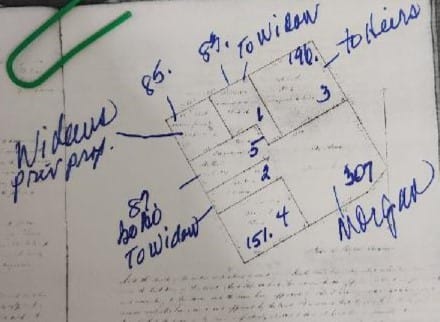
By the 1830s, his daughter and son-in-law Foster Bobo urged him to move with them to the new Republic of Texas where James was awarded a large land grant next to Bobo’s property and Sam Houston’s Raven Hill in Walker County. He was able to enjoy his new life in Texas for only a few years before his death in 1844. He is buried in an unmarked grave on his former farm.
Veterans of all wars know that wars are undertaken by countries but fought by individuals. Like all wars, the Revolutionary War produced many heroes whose personal sacrifices and contributions to the victory fade from memory over time. Sometimes they have markers placed on their graves to honor them. If there are no markers, their names are soon lost to public memory. Someone with Tinsley’s record in this war deserves to have his memory kept alive. The History Taskforce hopes that one day soon he will be given a suitable marker.
The legacy of the American Revolution is preserved, not just in the soil of its battlefields, but in the continuing remembrance of all its heroes.
Source: Read original article
Publisher: All Conroe Courier articles Verve MRSS 2.0 Multiple Photos