


It usually happens fast. Something feels off—not quite an emergency, but not something to ignore. Maybe it’s worsening pain, an inexplicable symptom, or a situation that doesn’t feel right.
And then comes the question most patients aren’t prepared to answer: Where do I go? Urgent care or the emergency room?
“It’s a hard decision because it happens under pressure,” said Dr. Tracey Antill, a physician at Elitecare Emergency Hospital. “Unfortunately, there’s no perfect checklist for where to go, making it harder for patients and families to make the right call.”
Why it feels confusing
For years, the answer was simple: emergency care meant going to a hospital.
That changed in the early 2000s when Texas introduced freestanding emergency departments—fully equipped ERs operating independently from hospitals.
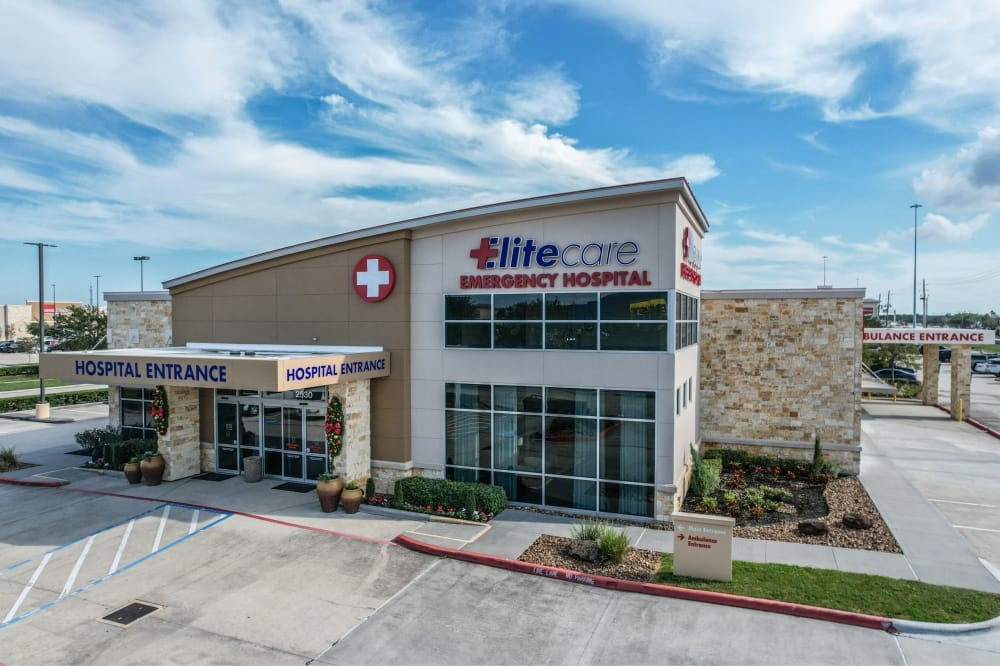
Today, hospital-based ERs and freestanding ERs, like EliteCare Emergency Hospital, provide the same level of emergency care. The difference is no longer what they do, but where they’re located.
Urgent care centers have expanded across communities, offering walk-in access for less severe conditions.
The result? More care options—but more uncertainty.
Urgent Care vs. ER: What’s the difference?
The difference comes down to the level of care a facility can provide.
Urgent care centers function more like walk-in doctors’ offices. They’re designed for lower-acuity needs and typically handle straightforward issues with limited diagnostics.
Emergency departments—inside a hospital or freestanding—are built for a broader range of conditions, with deeper diagnostic capabilities, advanced equipment and the ability to evaluate serious or life-threatening situations anytime.
That difference shapes how each setting operates—and how patients experience care once they walk through the door.
The patient experience at each
The difference between urgent care and emergency rooms shows up in time, process and cost.
Urgent care visits are typically quick and straightforward, with set hours and a billing structure similar to a doctor’s office.
Emergency rooms are open 24/7 and operate differently. Even for less-serious concerns, patients may undergo a thorough evaluation to rule out urgent issues, leading to more testing and a longer visit. Billing may include both a professional fee and a facility fee tied to that readiness.
“In the ER, we’re not just treating your immediate issue; we’re ensuring it’s nothing more serious,” Antill said.
For patients, the difference is simple: urgent care prioritizes speed and convenience, while emergency care prioritizes certainty.
Tips for patients
While there’s no perfect formula, a few guidelines can help patients feel more confident when deciding:
- Don’t overthink where to go
Researching options while symptoms worsen can delay care. The most important step is getting evaluated.
- Ask questions at the front desk
It’s okay to ask if you’re in urgent care or an emergency department before being seen. A quick question can prevent confusion later.
- Know you can change course
Patients aren’t locked in. If you arrive and realize it’s not the expected level of care, you can choose to go elsewhere.
- Know your billing rights
Your right to choose emergency care should not be accompanied by fear of billing. Because of the nature of an emergency, EliteCare will never bill more than a patient’s in-network provider benefits.
“Touch base with our facilities,” Antill said. “Then, our medical professionals will help you get where you need to go.”
Bridging the Gap: EliteCare and Affinity
For patients deciding where to go, having both urgent and emergency care within one connected system can remove much of the guesswork.
EliteCare Emergency Hospital operates as a 24/7 freestanding emergency department, offering full emergency services, advanced diagnostics and immediate physician access for serious or life-threatening conditions. For patients who require more time, EliteCare also provides private observation and in-patient rooms for extended testing and treatment—such as ruling out a cardiac event—ensuring continuity of care without the need to transfer elsewhere.
Through its integration with Affinity Urgent Care, patients have access to a lower-acuity option. Affinity Urgent Care locations in Alvin and La Marque provide walk-in care, on-site X-rays, lab testing and select physical exams.
Because the two systems are connected, patients don’t have to restart their care for a higher level of treatment. If a case is more serious than expected, coordination between Affinity and EliteCare ensures a seamless transition to emergency care.
This structure helps patients avoid unnecessary delays, guiding them to the right level of care the first time.
What patients are saying
“This place blew me away with how amazing it was. I have been to many other local ERs with family, and it’s a completely different type of place. The staff treats you like they are glad you came there, they exceed every expectation. It is cleaner than a NICE hotel. Every doctor has an amazing bedside manner, are excellent at explaining what’s wrong on a level easy to understand, and takes all the time you need to ask/answer questions. And NO wait! I will never go anywhere else. This place is a God send.” Jaime Bianchi, Patient Google Review
When in doubt, start somewhere
In uncertain moments, the most important step is seeking care.
Symptoms can escalate quickly, and delaying a decision often adds more stress than clarity. While the healthcare system includes different care levels, patients don’t need to navigate it perfectly before getting help.
Learn more about both here: EliteCare Emergency Hospital | Affinity Urgent Care.
The above story was produced by Multi-Platform Journalist Chloe Chapel, with the Community Impact’s Storytelling team, using information solely provided by the local business as part of their “sponsored content” purchase through our advertising team.